
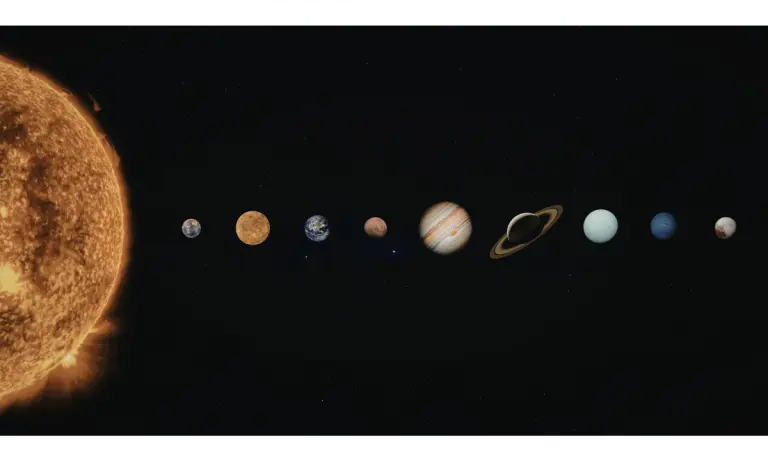
planets in astrology
what each planet means in your birth chart
In astrology, the planets represent different functions, drives, and parts of consciousness within the natal chart. Each planet shows a specific way you experience life, express yourself, make choices, relate to others, and move through the world.
A simple way to think about it is this: the planets describe what part of you is being expressed.
For example…
- Venus represents how you relate, connect, attract, value, and experience pleasure.
- Mars represents how you take action, pursue desire, assert yourself, and respond to challenge.
Each planet has its own role in the chart. The sign of the planet describes how that energy expresses itself, while the house placement shows where that energy is most likely to show up in your life. Someone with Venus in Taurus may express love and connection through loyalty, beauty, comfort, and consistency. Someone with Mars in Aries may take action quickly, directly, and instinctively.
The planets are key to understanding your natal chart because they help you identify the core energies operating within you. Once you understand what each planet represents, it becomes much easier to interpret the signs, houses, and aspects connected to them.
how planets work in astrology
One of the core principles in astrology is this: The planets describe and symbolize different inner drives, energy, and specific parts of your true nature — how you think, feel, desire, love, act, grow, mature, and transform.
For example, the Moon describes your emotional world, instincts, needs, and sense of safety. Mercury describes how you think, communicate, process information, and make sense of your experiences. Venus shows how you relate, attract, value, connect, and experience pleasure. Mars shows how you take action, assert yourself, pursue desire, and respond to conflict or challenge.
Before you can fully understand what a sign or house means in your natal chart, it is important to know which planetary energies are present and being expressed there.
For example, Saturn in Gemini is very different from Venus in Gemini. Saturn in Gemini may show lessons, discipline, fear, responsibility, or mastery around communication, learning, and using your voice. Venus in Gemini may show attraction to conversation, curiosity, mental connection, variety, and playful communication in relationships.
Same sign. Very different expression.
the key is to remember…
Planet = what energy or aspect of you is being expressed
Zodiac Sign = how that part of you expresses itself
House = where that energy shows up in your life consistently
the personal planets in astrology
In astrology, the personal planets are the planets closest to Earth that tend to influence or describe your most immediate, everyday experience of self. These placements are often the easiest to recognize in daily life because they speak to your identity, emotions, thoughts, desires, relationships, and actions.
The personal planets include the Sun, Moon, Mercury, Venus, and Mars. Compared to the social planets like Jupiter and Saturn, which speak more to growth, responsibility, and larger life lessons, and the outer planets like Uranus, Neptune, and Pluto, which describe generational themes and deeper transformation, the personal planets feel more direct and personal.
sun – identity and life force
The Sun represents your core identity, vitality, and life force. It shows where you are learning to shine, express yourself, and develop a stronger sense of self.
moon – emotions and needs
The Moon represents your emotional world, instincts, needs, and sense of safety. It shows what helps you feel nourished, grounded, and emotionally secure.
mercury – communication and thinking
Mercury represents your mind, communication style, learning process, and how you make sense of information. It shows how you think, speak, listen, and process the world around you.
venus – love, values, and attraction
Venus represents love, connection, beauty, values, pleasure, and attraction. It shows what you appreciate, how you relate, and what helps you feel connected and fulfilled.
mars – drive, action, and ambition
Mars represents drive, action, desire, ambition, and courage. It shows how you pursue what you want, respond to challenge, assert yourself, and use your energy.
the social planets in astrology
The social planets are Jupiter and Saturn. These planets sit between the personal planets and the outer planets, so they act as a bridge between your individual experience and the larger structures, beliefs, and responsibilities that shape your life.
While the personal planets often describe your everyday personality and inner drives, the social planets show how you grow, mature, build wisdom, and interact with the world beyond yourself.
jupiter – growth and expansion
Jupiter represents growth, expansion, wisdom, opportunity, faith, and belief. It shows where you may seek meaning, develop confidence, broaden your perspective, and experience abundance or possibility.
saturn – discipline and responsibility
Saturn represents discipline, responsibility, structure, boundaries, maturity, and long-term growth. It shows where you may face lessons, develop resilience, and build something meaningful through patience, commitment, and effort.
the outer planets in astrology
The outer planets are Uranus, Neptune, and Pluto. These planets move more slowly than the personal and social planets, so they often describe deeper, longer-term themes in the natal chart.
While the personal planets tend to feel more immediate and individual, the outer planets can point to generational patterns, collective shifts, and areas of life where you may experience awakening, surrender, transformation, or deep inner change.
uranus – innovation and disruption
Uranus represents innovation, freedom, rebellion, awakening, and sudden change. It shows where you may break from tradition, think differently, disrupt old patterns, or seek more authenticity and independence.
neptune – dreams, spirituality, and illusion
Neptune represents dreams, intuition, spirituality, imagination, compassion, and illusion. It shows where you may feel deeply inspired or connected, as well as where boundaries, clarity, or discernment may be important.
pluto – transformation and power
Pluto represents transformation, power, shadow work, intensity, and deep psychological change. It shows where you may experience cycles of release, renewal, empowerment, and profound personal evolution.
chiron in astrology
While Chiron is not technically a planet, it is still an important placement to understand in your natal chart. In astrology, Chiron is often associated with core wounds, healing, wisdom, and the places where growth comes through self-awareness and integration.
Chiron can point to an area of life where you may feel especially sensitive, inadequate, rejected, or unsure of yourself. However, it can also reveal where you develop deep compassion, insight, and the ability to support others, based on what you have learned through your own healing process.
chiron – wounds, healing, and growth
Chiron represents the wound that can become a source of wisdom. It may show where you are learning to heal painful experiences from the past, reclaim confidence, and turn lived experience into strength.
For example, Chiron in the 3rd house may relate to wounds around communication, learning, or feeling heard. Over time, this placement may develop into a powerful ability to use words, teaching, or storytelling as a source of healing for yourself and others.
how planets show up in your natal chart
Once you understand what each planet represents, the next step is learning how that planet expresses itself in your natal chart. This is where the sign, house, and aspects become important.
A helpful way to remember this is:
Planet = what energy is being expressed
Zodiac Sign = how that energy expresses itself
House = where that energy shows up in your life
Aspects = how that planet interacts with other parts of your chart
Let’s build on the different layers with Venus as an example.
Layer 1 – What does Venus represent? Venus is related to love, values, attraction, pleasure, and connection — but this energy will express itself differently depending on the sign and house location in your natal chart.
Layer 2 – What zodiac sign is Venus in, and what are the characteristics of that sign? When Venus is in Aries, love may be expressed directly, boldly, and independently, while Venus in Pisces may express love through compassion, intuition, romance, and emotional sensitivity.
Layer 3 – Which house is Venus in, and what life themes does the house represent? Venus in the 2nd house may place more emphasis on self-worth, money, values, and material comfort, while Venus in the 10th house may connect love, beauty, creativity, or values to career, visibility, and public reputation.
Layer 4 – What aspects are in play? Aspects show how a planet is interacting with the rest of the chart. It shows its relationship with other planets, which influences how its energy is expressed. When a planet is in a supportive aspect, its energy may feel easier to access, while a challenging aspect may bring growth, tension, or lessons around that planet’s themes.
As you can see, this is why one placement never tells the whole story. To understand a planet in your chart, look at the planet itself, the sign it is in, the house it occupies, and the aspects it makes to other planets. Together, these layers create a clearer, more nuanced interpretation.
which planets matter most in a natal chart
Every planet in your natal chart matters, but some placements tend to stand out more than others. These are often the planets or points that shape your personality, life direction, patterns, and major themes most clearly.
the big 3: sun, moon, and rising sign
The Big 3 includes your Sun sign, Moon sign, and Rising sign. These are often the first placements people learn because they describe major parts of who you are.
Your Sun represents identity, vitality, and life force. Your Moon represents emotions, needs, and inner security. Your Rising sign represents your approach to life, first impressions, and how you move through the world.
chart ruler
Your chart ruler is the planet that rules your Rising sign. This planet is especially important because it can show a major theme or guiding energy in your life.
For example, if you have Gemini Rising, your chart ruler is Mercury. If you have Capricorn Rising, your chart ruler is Saturn. The sign and house of your chart ruler can reveal a lot about your direction, motivation, and how you navigate life.
stelliums
A “stellium” is when several planets are grouped together in the same sign and house. This creates extra emphasis in that zodiac sign and life theme. You may find that the characteristics of that zodiac sign are more prominent in your personality, and that a major area of your life is highlighted, such as relationships, career, spirituality, creativity, or home.
dominant planets
A dominant planet is a planet that has extra influence in your chart. This may happen because it is close to an angle, part of a stellium, strongly aspected, or connected to important placements like the Sun, Moon, or chart ruler.
For example, someone with a very strong Mercury may be highly focused on communication, learning, writing, teaching, or analysis. Someone with a dominant Venus may be especially oriented toward beauty, relationships, harmony, creativity, or values.
We never want to reduce the entire chart to a single planet, but noticing which planets are especially emphasized is helpful in identifying recurring themes and patterns that show up in your life.
avoid these common mistakes
When you are first learning astrology, it is easy to focus on one placement and miss the bigger picture. The planets are important, but they are only one part of the natal chart.
Avoid these common mistakes…
only focusing on the sun sign
Your Sun sign is important, but it is not your entire personality. The Moon, Rising sign, chart ruler, and other planetary placements all add important layers to your chart.
ignoring the house placement
A planet’s sign tells you how that planet expresses itself, but the house tells you where that energy shows up in your life. For example, Mars in Leo in the 2nd house will express differently than Mars in Leo in the 11th house.
overgeneralizing one placement
One placement never tells the whole story. Venus in Scorpio, Saturn in the 7th house, or Mars in Cancer can all show up differently depending on the rest of the chart. Aspects, house placement, chart ruler, and overall chart patterns matter.
practical tips to get started
When you begin learning astrology, try not to memorize isolated keywords for every placement. Instead, focus on identifying patterns and observing how the planetary energies actually show up in your life over time.
Start by looking at…
- repeating themes in your natal chart and how they show up in your life
- dominant planets and what they represent
- houses that are heavily activated (e.g., stelliums or heavily aspected)
- placements that strongly resonate with your personality or experiences
For example, if you have several planets in Capricorn, you may notice recurring themes around responsibility, ambition, structure, or long-term goals. If Mercury is heavily emphasized in your chart, communication, learning, writing, or analysis may play an important role in your life.
It can also be helpful to reflect on how different planets feel internally because Astrology becomes much easier to understand when you observe it through real-life experiences…
- How do you respond to emotional situations, especially under stress? (Your Moon)
- What drives you to take action? (Your Mars)
- What is your relationship to love, pleasure, or values? (Your Venus)
want a personal reading instead?
Still unsure? Schedule an Astrology Natal Chart (with transits) reading – CLICK HERE