

Human Design can be a helpful tool for parenting because it gives you a deeper understanding of how your child is naturally wired — how they use energy, how they make decisions, and what helps them feel supported, seen, and regulated. Instead of expecting every child to respond the same way, Human Design offers a framework for recognizing their unique needs and working with their design rather than against it.
In this article, we’ll explore how Human Design can support you as a parent by looking at energy types in children, high-level decision-making through authority, what different kids may need emotionally and energetically, and practical ways to apply this in everyday life. The goal is not to parent perfectly, but to better understand your child’s natural rhythm so you can support them with more clarity, compassion, and confidence.
If you’re new to Human Design, you may want to start with the Human Design Guide for a broader overview of the system. And if you’re especially interested in how Human Design shows up in close connections and family dynamics, the Human Design Relationships page is a great next step.

new to human design?
Human Design is a modern system that combines astrology, the I Ching, the Kabbalah, the chakra system, and quantum physics to create a unique blueprint or roadmap for each person based on their birth details (similar to astrology). It provides insight into a person’s energy type, decision-making strategy, personality traits, and how they are designed to interact with the world to experience flow and attract what they want in life.
When applied to parenting, Human Design helps you understand your child’s natural tendencies and how they are designed to use their energy so you can parent with awareness and compassion. I wish I had known about Human Design when my son was growing up because it offers us powerful tools to support our child’s personal growth and well-being.
energy types and children
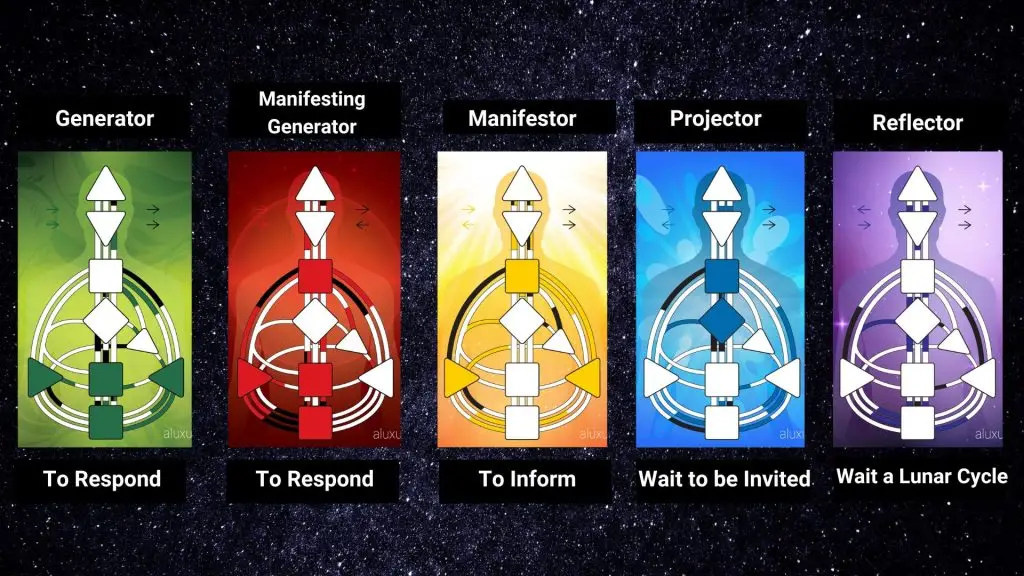
The first way Human Design can be helpful in parenting is by understanding our child’s (or children’s) energy type. Energy type reveals how each individual is designed to use their energy, especially day-to-day.
generator kids
Generator children usually have strong, sustainable energy when they are engaged in things they genuinely enjoy. Because they have a defined Sacral Center, they tend to light up when something feels satisfying, fun, or interesting to them. These kids often do well when they have consistent outlets for their energy, but it is important not to assume they should keep going just because they have stamina. When their interest drops, their energy often drops too.
Parents can best support Generator children by helping them notice what feels like a true yes, honoring when they are done, and not forcing them to push through activities that no longer feel right. Otherwise, they will experience frustration and burnout.
manifesting generator kids
Manifesting Generator children also have a defined Sacral Center, so they often have a lot of energy when they are excited by what they are doing. They may seem fast-moving, multi-passionate, and eager to jump between interests, hobbies, or projects. Unlike a more steady Generator child, they may want to try many things, skip steps, or pivot quickly when something no longer feels good.
Parents can support them by understanding that changing course is often natural for them, not a sign of flakiness or lack of discipline. These children do best when they are allowed to follow what energizes them, explore freely, and move at their natural pace without too much pressure to follow through and be linear.
projector kids
Projector children do not have a defined Sacral Center, so their energy tends to be less consistent than Generator or Manifesting Generator children. They may tire more easily, need more downtime, and benefit from rest even when they are enjoying themselves. These children are often naturally observant, insightful, and aware of other people, but they are not designed to be “doing” things constantly.
Parents can support Projector children by recognizing their need for breaks, helping them avoid overcommitting, and valuing their insight as much as their output. When they are pushed to keep up with more energetic children, they may feel exhausted, bitter, or misunderstood.
manifestor kids
Manifestor children also have undefined Sacral Centers, so their energy is not consistently available in the same way as Sacral beings. These children are often independent, self-directed, and more likely to initiate what they want to do without waiting for permission. They may resist control or react strongly when they feel managed too closely. At the same time, they still need rest and may tire faster than others expect.
Parents can support Manifestor children by giving them appropriate freedom, speaking to them directly and respectfully, and understanding that their need for autonomy is part of their design. When supported well, they often thrive when they feel trusted rather than micromanaged.
reflector kids
Reflector children have no defined centers, which makes them especially sensitive to the people and environments around them. Their energy can vary widely from day to day, and they may seem very different depending on where they are and who they are with. Because they lack a defined Sacral Center, they are not designed for consistent output and may need considerable flexibility, rest, and time to decompress.
Parents can support Reflector children by paying close attention to their environment, not expecting them to be the same every day, and giving them room to process life in their own time. These children often thrive when they feel safe, unpressured, and free to be exactly as they are.
key takeaways
Generator and Manifesting Generator children usually have more sustainable energy when they love what they are doing, while Projector, Manifestor, and Reflector children are more likely to need rest, space, and flexibility. Understanding this can prevent unfair labels and help you respond to your child’s real needs with more compassion and accuracy.
go beyond the basics of your human design chart
If you’re ready to move past surface-level information, the Aligned by Design Bundle helps you understand your chart step-by-step so you can apply your design with more clarity and confidence.
decision-making (authority)
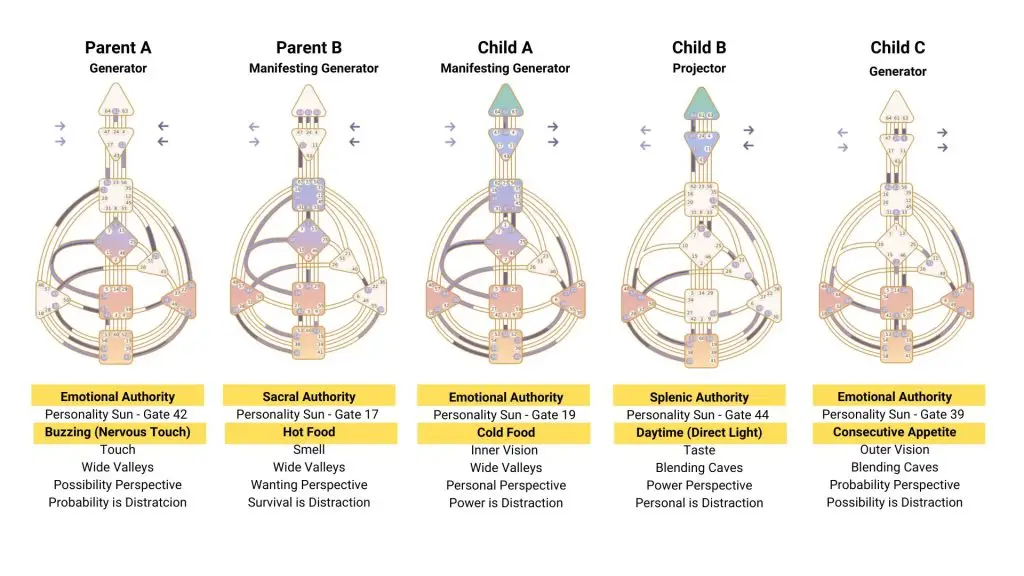
Human Design can also show us how a child’s inner guidance, or authority, is designed to work. Authority refers to the intuitive decision-making process built into the chart — the internal signal that helps a person know what feels right, wrong, aligned, or not aligned for them. When children learn to recognize and trust this inner voice, it can become a powerful tool they carry with them for life.
As parents, understanding your child’s authority can help you support decisions in a way that actually matches how they are wired. Some children know quickly in the moment, while others need time, space, or a different kind of prompting before clarity comes. For example, a child with Sacral Authority may respond immediately through desire or gut response, while a child with Emotional Authority may need more time to feel their way through a decision. This reminds us that children are not all designed to make decisions the same way, and learning about their authority can help you meet them with more patience, trust, and support.
sacral authority kids
Sacral Authority kids tend to know quickly whether something feels right or wrong. Their guidance comes through gut response, desire, and immediate body-based signals. Parents can support them by asking simple yes-or-no questions and paying attention to what genuinely lights them up or makes them feel satisfied.
emotional authority kids
Emotional Authority kids need time before making important decisions or commitments. Their clarity comes gradually as feelings move and settle, so they are not designed to decide on the spot. Parents can support them by giving them space and avoiding pressure for immediate answers.
splenic authority kids
Splenic Authority kids receive guidance through subtle, instinctive knowing in the moment. Their intuition is often quick and quiet, and they may not always be able to explain it. Parents can support them by helping them trust their first instinct and body-based sense of what feels safe or off.
ego or heart-centered authority kids
Ego or Heart-Centered kids know what is right through desire, willpower, and what they truly want. They need permission to be honest about what they have energy for and what matters to them. Parents can support them by helping them honor their wants without shame and make commitments carefully.
self-projected authority kids
Self-Projected Authority kids often find clarity by talking things out. Hearing themselves speak helps them recognize what feels true. Parents can support them by being a calm sounding board and giving them space to process out loud without trying to fix or direct them.
mental authority kids
Mental Authority kids often need the right environment and the right conversations to gain clarity. Their decision-making is influenced by the spaces and people around them. Parents can support them by giving them time, reducing pressure, and noticing which environments help them feel clear.
no inner authority kids
No Inner Authority kids, who are Reflectors, need time and space to gain clarity. Their decisions are best made slowly rather than in the moment. Parents can support them by not rushing them and by helping them notice where and with whom they feel most comfortable and clear.
learn how to make aligned decisions
Get the free Human Design Decision Guide to learn how to use your Authority with more clarity and confidence.
what kids need
Human Design can also offer helpful insight into what a child needs in order to feel supported, seen, and able to thrive. A child’s chart can point to the kinds of environments that feel most nourishing to them, the conditions that help their body and energy relax, and the spaces where they are more likely to feel like themselves. It can also highlight their natural gifts, strengths, and talents, so parents can recognize and encourage what they are good at, rather than focusing only on correction or performance in other areas.
The chart can also show how a child is designed to communicate and interact with the world, which can be especially helpful when trying to understand how they express themselves or what helps them feel heard. In addition, the arrows in Human Design can offer clues about whether a child tends to do better with more structure and consistency or with greater flexibility and flow. Together, these pieces can help parents create support that feels more personalized, practical, and aligned with who their child naturally is.
practical tips
- Notice whether your child seems more energized by structure or by flexibility, and adjust routines accordingly rather than assuming one approach works for every child.
- Pay attention to the environments where your child seems most calm, creative, focused, or happy — this can give you clues about their ideal environment needs.
- Support your child’s decision-making by honoring their authority type instead of pushing them to decide in ways that don’t match their design.
- Recognize and reflect back your child’s natural strengths, gifts, and talents so they feel seen for who they are, not just for what they achieve.
- Observe how your child naturally communicates and try to meet them there, whether they need to talk things out, respond in the moment, or have more time and space.
- Avoid labeling Projector, Manifestor or Reflector children as lazy or Generator / Manifesting Generator children as “too much” — instead, work with their natural rhythm and capacity.
- Create space for rest, downtime, and alone time when your child’s chart suggests they are sensitive to overstimulation or inconsistent energy.
- Ask better questions based on their design, such as yes/no questions for Sacral children or giving extra time for Emotional children to feel into a choice.
- Use Human Design as a tool for understanding, not control — the goal is to support your child’s natural way of being, not force them into a box.
- Revisit what is working as your child grows, because support often becomes easier when you stay curious and responsive to who they already are.
