

Generators and Manifesting Generators share a lot in common, which is why the difference between them can feel confusing at first. In fact, many Human Design readers and teachers do not believe there is a meaningful difference between the two. Some only recognize four energy types — Generator, Projector, Manifestor, and Reflector — and see Manifesting Generators as a subtype of Generator rather than a separate type. And to be fair, there is logic to that view: both Generators and Manifesting Generators are Sacral beings designed to respond to life, and both have access to sustainable life force energy.
At the same time, many people do find it helpful to distinguish between the two because Manifesting Generators often have a noticeably faster, more dynamic rhythm. While Generators may move in a steadier, more focused way, Manifesting Generators often multitask more naturally, move more quickly, and may pivot or skip steps along the way. In this article, we’ll break down the key differences between a Generator and a Manifesting Generator, including how their energy works, how they move through decisions and action, and what makes each one unique. This article is meant to bring clarity — not rigidity — so you can better understand your chart, your energy, and why two seemingly similar energy types can still operate quite differently. You get to decide if there is a difference between them.
If you are new to Human Design, check out the Human Design Guide to learn more about your energy type, strategy, authority, profile, gates, channels, and much more.
To dig deeper into the Energy Types, you may also refer back to the Human Design Energy Types Guide anytime.
what generators and manifesting generators have in common
Generators and Manifesting Generators have more in common than they have differences, which is why they are often grouped together.
- Both are Sacral beings, meaning they have access to powerful life force energy through a defined Sacral Center.
- Both are designed to respond to life rather than force things from the mind, and both tend to function best when they let opportunities, people, ideas, and experiences give them something real to react to.
- They are also both here to build, create, and sustain.
- Their energy is deeply connected to work, mastery, momentum, and bringing things to life over time.
When aligned, both types can generate energy through engaging with what feels satisfying, meaningful, and correct for them. This is the foundation they share, even if the way they move with that energy can look a little different.
what is a generator?
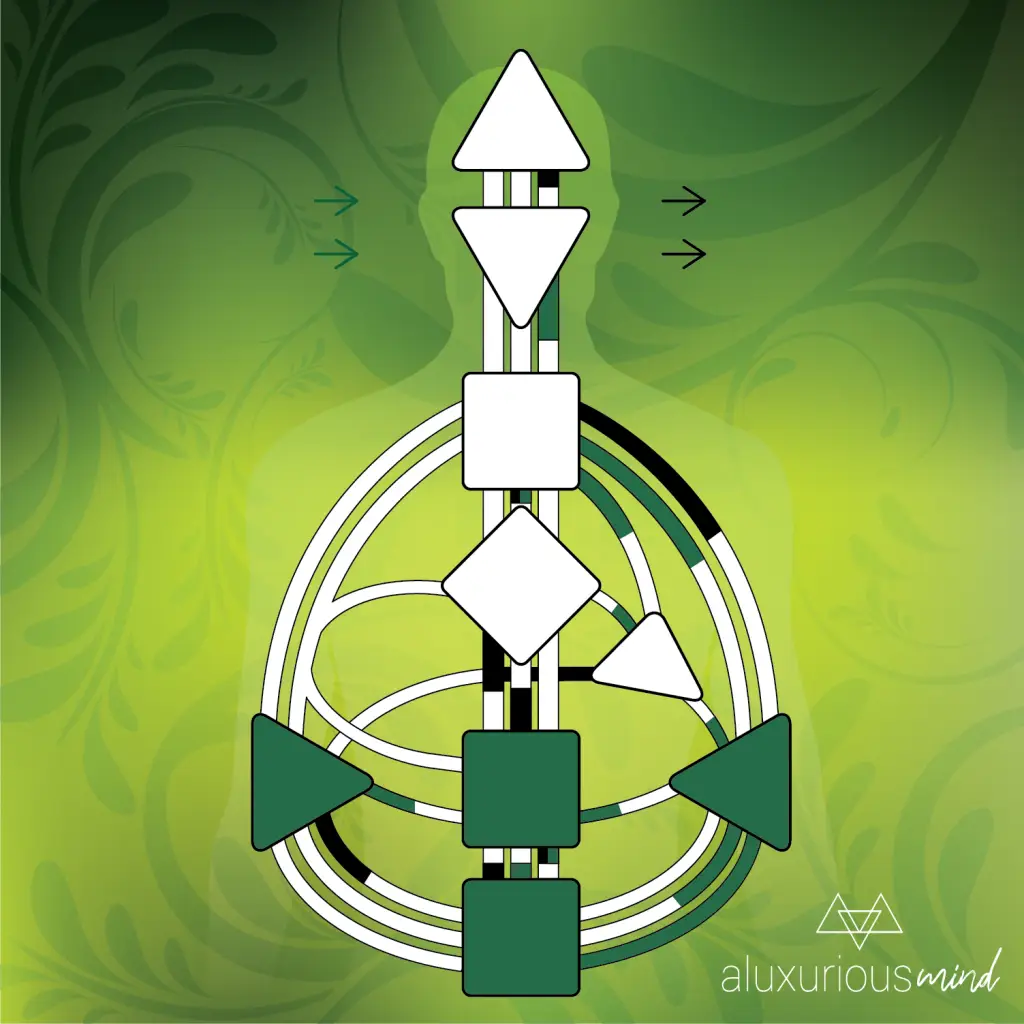
A Generator is a Sacral being with a consistent life-force energy designed to build, work, and create in a steady, sustainable way. Generators often move through life with a more linear process, preferring to respond, commit, and then develop skill or momentum over time. Rather than jumping around constantly, they tend to do well when they can stay engaged with what feels satisfying and allow their energy to build naturally.
One of the core themes of the Generator is mastery over time. Their energy often becomes stronger and more rewarding the deeper they go into something that genuinely lights them up. When aligned, Generators can be incredibly powerful, productive, and fulfilled — not because they force things, but because they keep responding to what feels right and allow their gifts to develop through consistency and repetition.
what is a manifesting generator?
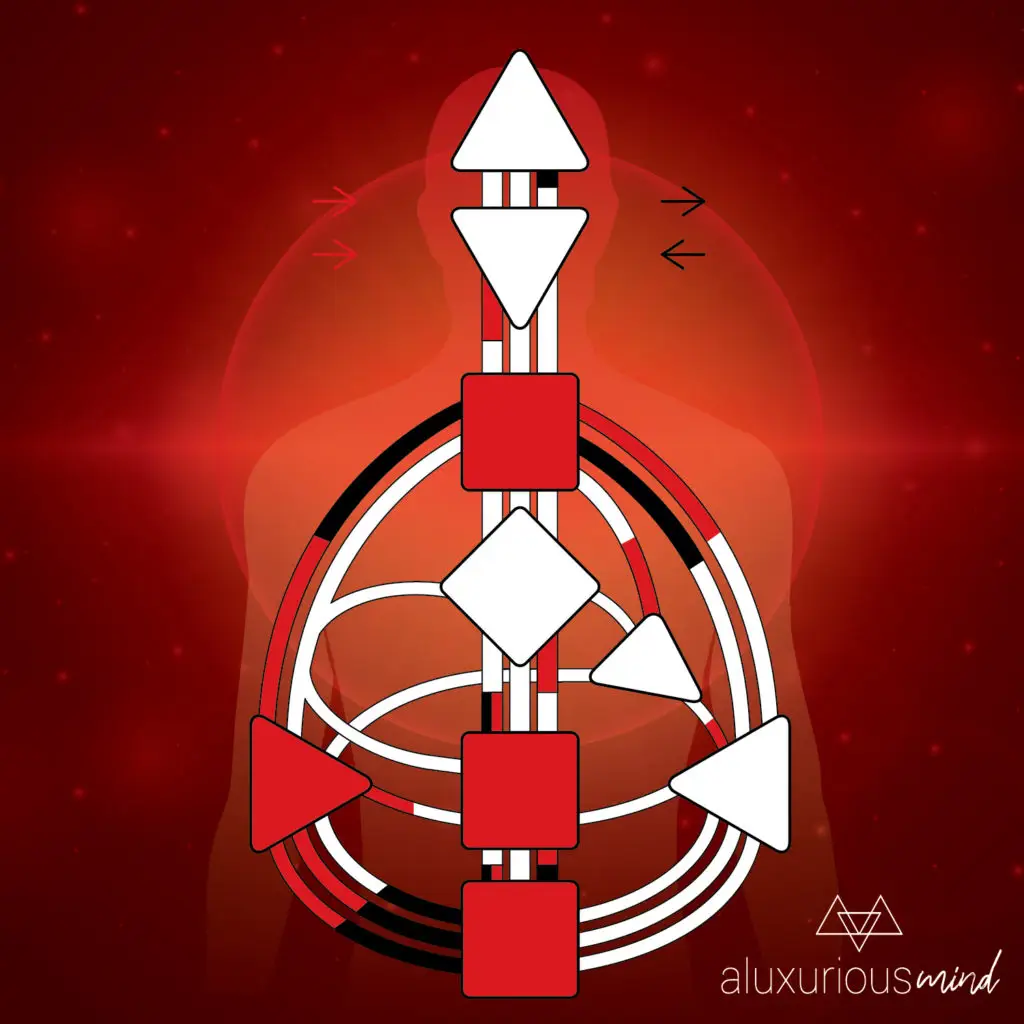
A Manifesting Generator is a Generator type with Sacral energy that tends to move in a faster, more dynamic way. Like all Generators, they are designed to respond first, but once they have something to respond to, their energy can kick in quickly and move with a lot of momentum. This is often why Manifesting Generators seem faster-paced, more adaptable, and in motion than a more steady Generator.
Manifesting Generators are also often multi-passionate, meaning they may be interested in many things at once or move through different interests over time. They are not always here to do things in a slow, linear fashion. In fact, they often skip steps, find shortcuts, or learn by jumping in and adjusting as they go. This does not mean they are doing life wrong — it is often part of how their energy naturally operates.
key differences between a generator and a manifesting generator
the bodygraph chart
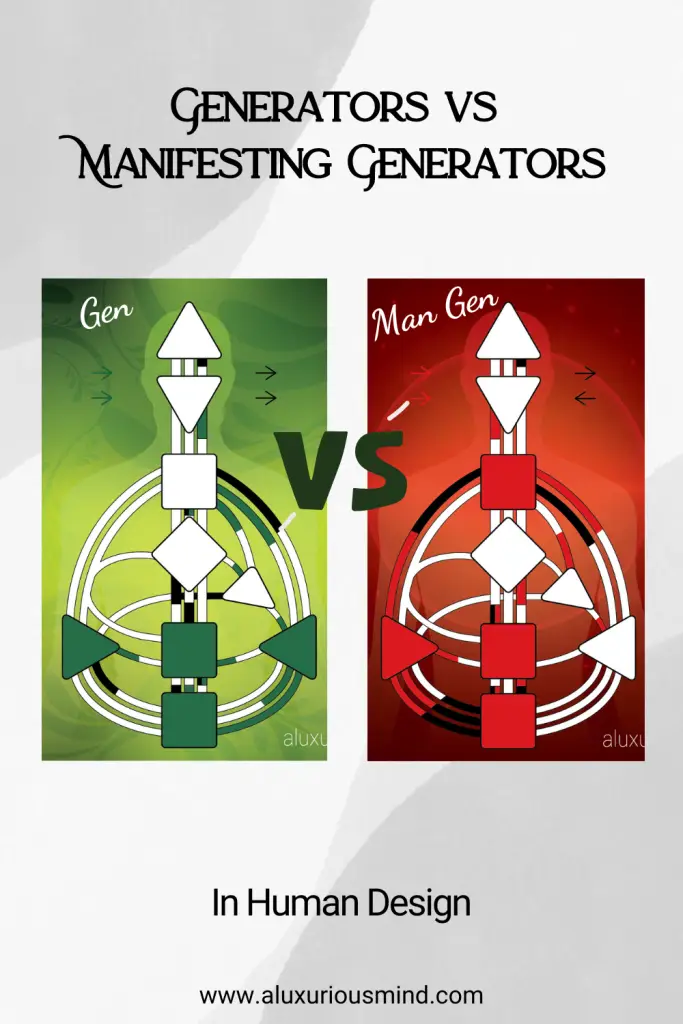
- A pure Generator Energy Type has the Sacral Energy Center defined in the bodygraph chart.
- When the Sacral Energy Center is defined, and there is a motor center (ego, sacral, root, or solar plexus) connected directly to the Throat Energy Center, this is what makes someone a Manifesting Generator Energy Type.
speed
- Generator: tends to move at a steadier pace
- Manifesting Generator: tends to move faster once something activates their response
work style
- Generator: often works in a more linear, focused way
- Manifesting Generator: often works in a more non-linear, multi-directional way
energy expression
- Generator: energy is often more sustained, consistent, and buildable over time
- Manifesting Generator: energy is often more dynamic, changeable, and quick-moving
process
- Generator: often prefers a step-by-step path and may build mastery through repetition
- Manifesting Generator: often skips steps, finds shortcuts, and learns by jumping ahead and adjusting along the way
Neither style is better. A Generator is not “too slow,” and a Manifesting Generator is not “too scattered.” They simply move differently. The key is recognizing your natural rhythm so you can work with it instead of judging yourself for it.
are they really different types?
This is one of those areas in Human Design where teachings can vary. Some readers and teachers combine Generators and Manifesting Generators into one larger Generator category, since both are Sacral beings designed to respond. From that perspective, the core mechanics are similar enough that the distinction is not always considered essential.
At the same time, the differences can matter a lot in real life. Many people find it genuinely helpful to understand whether they have a steadier, more linear Generator rhythm or a faster, more multi-passionate Manifesting Generator rhythm. That distinction can bring a lot of clarity around pacing, work style, multitasking, frustration, and why one person may seem to move through life very differently than another, even though both are technically Sacral beings.
So yes, there is a valid argument for grouping them together. But there is also real practical value in highlighting the difference. The point is not to overcomplicate the system — it is to use the distinction ONLY if it helps you understand yourself more clearly.
the most important similarity between these two types
The biggest similarity between Generators and Manifesting Generators is this: both are designed to respond first and then follow their authority. That matters more than speed or style.
Both types are not meant to force things from the mind. Alignment begins when something shows up for them to respond to, and then authority guides the next step.
friendly reminder for generator energy types
Whether you are a Generator or a Manifesting Generator, the most important thing to remember is that your alignment begins with response. Your pace may look different, your work style may look different, and your energy may move differently — but for both types, the strategy is the same: wait for something to respond to, then follow your authority.
You do not need to force, chase, or compare yourself to someone else’s rhythm. The more you trust your own response and the way your energy naturally works, the easier it becomes to move through life in a way that feels satisfying and aligned.
go beyond the basics of your human design chart
If you’re ready to move past surface-level information, the Aligned by Design Bundle helps you understand your chart step-by-step so you can apply your design with more clarity and confidence.
related articles
- Generator Energy Type – CLICK HERE
- Manifesting Generator Energy Type – CLICK HERE
- Manifesting Generator – How to know if you are more Manifestor or Generator? – CLICK HERE
- How Sacral Authority works for me – CLICK HERE
- Sacral Energy Center – CLICK HERE
- Throat Energy Center – CLICK HERE
artist attribution
- Featured image Photo by Becca Tapert on Unsplash
references
- The Definitive Book of Human Design: The Science of Differentiation by Lynda Bunnell and Ra Uru Hu
- Jenna Zoe myhumandesign.com Level 1 – 3 Reader Training
disclaimer
As an Amazon Associate I earn from qualifying purchases. Some links on this blog post may be affiliate links that can result in small commissions & help support the site.
